
I should have written about the Suica Card in my Travelling to Tokyo article, but honestly, it was already too long, and I didn’t want to disturb the SEO flow. HAHAHA. So here we are, giving it its own spotlight, because it truly deserves it. Gitew!
Before going to Tokyo, I genuinely wondered whether I even needed a Suica Card or if my Wise Card was already enough. Wise lets you hold Japanese yen, the exchange rate is good, and it works internationally. It sounded like the perfect solution. But after experiencing Tokyo myself, I realised the Suica Card and Wise Card play very different roles, and having both made travelling so much easier.
Suica Card Is Faster and More Seamless for Transport
The biggest strength of the Suica Card is speed and convenience. Tokyo’s train stations are extremely busy, especially during peak hours. With the Suica Card, you just tap and walk through the gate, without delay. Even though Wise works in Japan, foreign cards can sometimes take longer to process. Those few seconds might not sound like much, but when you’re rushing to catch a train, it makes a difference. The Suica Card, introduced by JR East, was designed specifically for Japan’s public transport system. That’s why it works instantly and reliably.
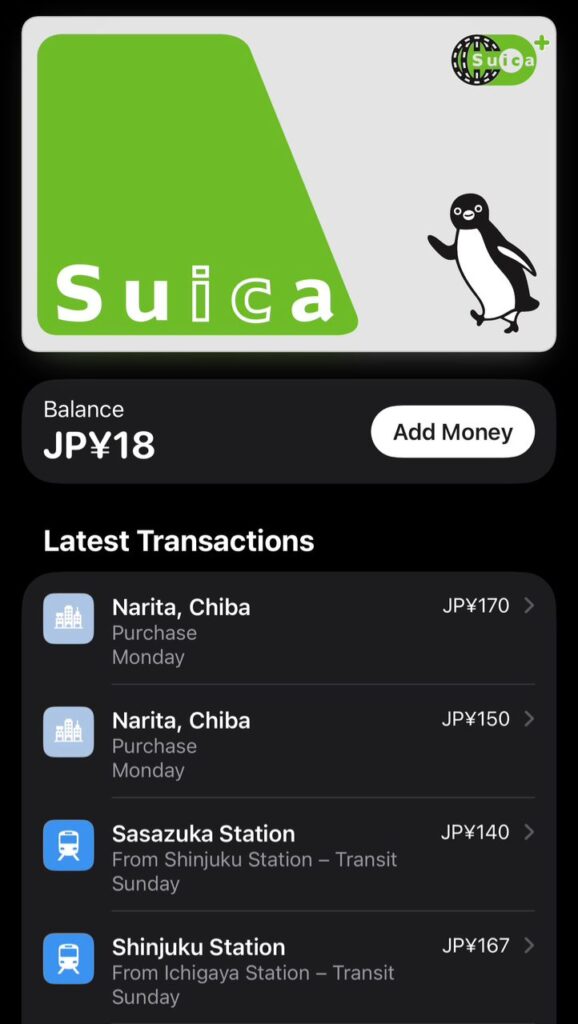
If you’re using an iPhone, you can now add the card directly to your Apple Wallet and just tap your phone. It feels effortless. No more queuing and overthinking of not getting it as soon as you land at the airport. HAHA. Remember, add the card directly to your Apple Wallet, ya. Do not download the app itself unless you can read Kanji. LOL
Wise Card Is More Flexible for Larger Spending
Wise is still extremely useful, and I personally relied on it a lot. I used Wise for shopping at bigger stores, paying at modern cafes, and topping up my Suica Card. Because Wise allows you to hold Japanese yen, you avoid unnecessary foreign exchange charges from Malaysian banks, and of course, the unpredictable currency exchange rate, which goes up and down whenever.
It also gives you flexibility. Your money stays in your account until you spend it, unlike the Suica Card, where you need to preload the balance first. For larger purchases, Wise is definitely the better option.
Suica Card Works Almost Everywhere for Small Daily Payments
One thing I didn’t expect was how widely it is accepted. You can use it at convenience stores, vending machines, and for train and bus fares. Even when foreign cards are accepted, it is still faster and more reliable because it’s considered a local stored value. It makes daily spending feel smooth and stress-free.
The Downside of the Suica Card
This is the one important downside of the card that many people don’t talk about. Once you add money to the card, you cannot withdraw it as cash. This means before leaving Japan, you’ll probably find yourself checking your remaining balance and trying to spend it, unless your next trip is already scheduled.
I personally used mine at convenience stores in the airport to buy unwanted snacks just to finish the remaining yen inside. It’s not a huge problem, but it does require a bit of planning. You don’t want to top up too much near the end of your trip. With Wise, your money stays in your account, and you can use it anywhere else in the world.
So, Is the Suica Card Still Worth It?
Yes. Absolutely. But the best strategy is to use both.
Use the Suica Card for:
- Public transport
- Convenience stores
- Vending machines
Use Wise for:
- Shopping
- Cafes
- Controlling your main travel budget
- Topping up your Suica Card
The Suica Card makes moving around Tokyo incredibly smooth, while Wise gives you flexibility and financial control.
If you would like to contribute to my dream of travelling to Tokyo again someday, you can buy me a coffee at https://ko-fi.com/nlymr. Thanks for reading!